The flaw of attraction

I recently wrote about how my journey into the mindfulness world re-exposed me to the racist grifters using mindfulness as a cash cow, and today I want to look at another sad reality I keep finding in the mindfulness world: the continued pseudoscientific myth of the “Law of Attraction.”
This idea grew to new levels of fame after the release of The Secret, and it has been a multi-level marketing scheme ever since.
The so-called Law of Attraction even sounds scientific. It brings to mind the laws of thermodynamics, or ideas like gravity, which is often referred to as the law of gravity, when it is actually the theory of gravity.
But what is the Law of Attraction?
Simply put, the Law of Attraction is the belief that your thoughts and emotions can draw similar experiences into your life, usually through the idea that “like attracts like.” This is tied to manifestation, the practice of setting intentions, visualizing outcomes, and acting as if you can influence reality through mindset and focus.
It’s a self-help framework that recasts ordinary goals, motivation, and confirmation bias as a cosmic mechanism, while offering no reliable evidence that thoughts alone can make external events happen.
You’ve likely heard of vision boards, where people put photos of fancy cars, money, and big houses and believe that if they put these thoughts out into the universe and believe them hard enough, they will manifest into reality.
That’s where the gurus come in, selling you products that promise to help you manifest faster, or even helping you set up your own home business so you can help others manifest their dreams. You can attend “mastermind” courses, join “exclusive” clubs, and pay a small five-figure price tag or more.
And when those products don’t work, you can buy the add-ons, which will surely help because maybe you’re just missing a few steps.
But the truth is, there is no Law of Attraction. The basic scientific pushback is that it claims your thoughts can directly shape reality, but there’s no solid evidence for that. What usually gets called “manifestation” is better explained by ordinary psychology: confirmation bias, selective attention, motivation, and the fact that when people focus on a goal, they often behave differently and notice more opportunities. In other words, it’s not the universe responding to your vibes; it’s your brain and behavior doing the work.
The good here is that the idea can motivate people to take action and go get what they want.
The bad, or the flaw in the design, is that it’s marketed as a sit-back-and-wait mindset. Companies sell programs that play a video of your vision board over your computer screen so you’re subconsciously taking in those images.
Joe Vitale is one such guru. He wears mala beads, writes books with Zen in the title, and comes across as a spiritual leader. He even calls himself Dr. Joe Vitale, but his degree came from an unaccredited university in the study of metaphysics.
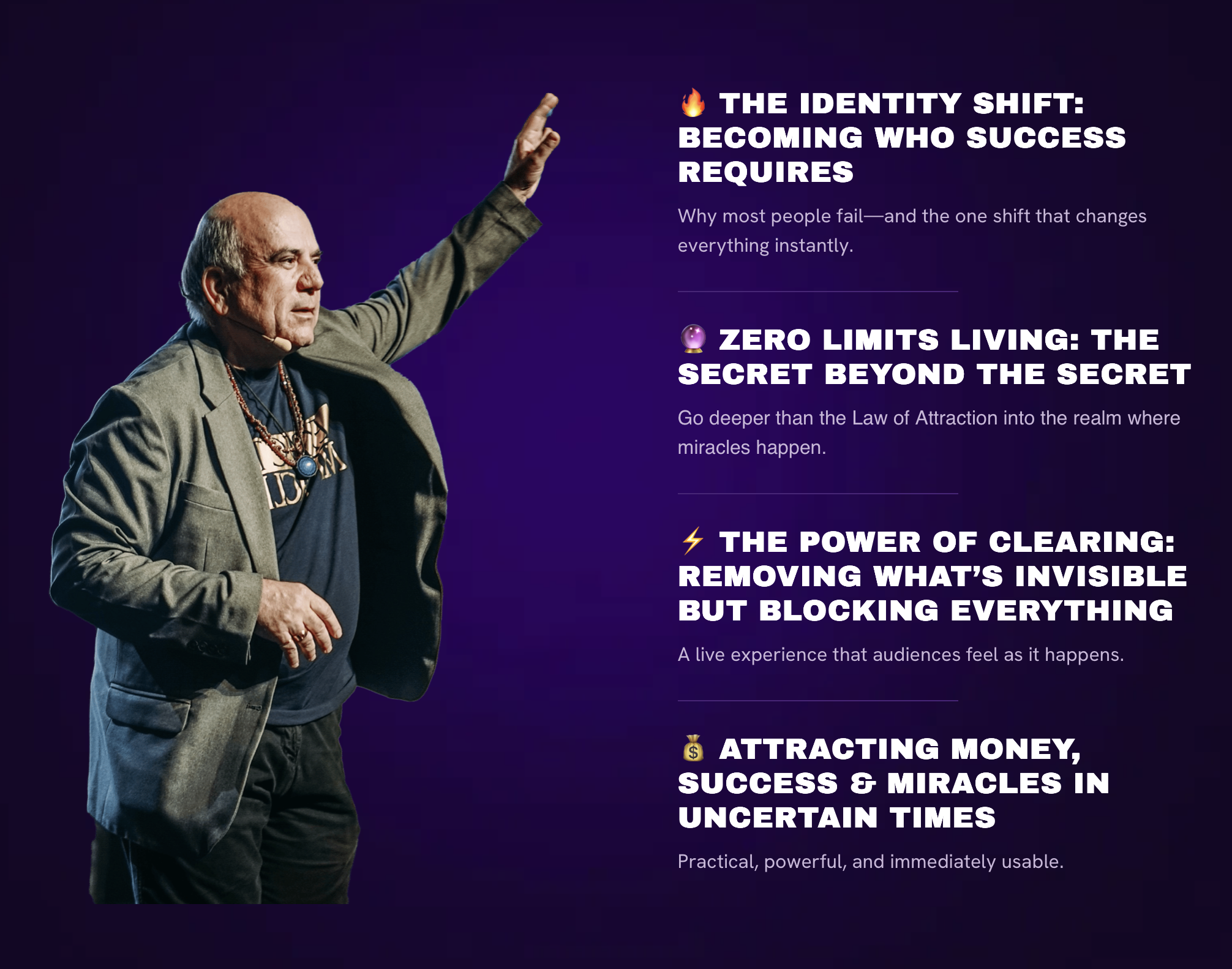
Vitale, as seen in the image below, sells you wealth, health, and books with words like millionaire, money, and abundance in the title. He took book a meeting to buy his product; they even ask you if you understand that this is a financial investment in your future.
There is also Joe Dispenza. Dispenza uses the title doctor, though he earned a Doctor of Chiropractic degree from Life University. While technically speaking he can use the term with that degree, it still feels disingenuous because he is not a medical doctor and does not hold a PhD.
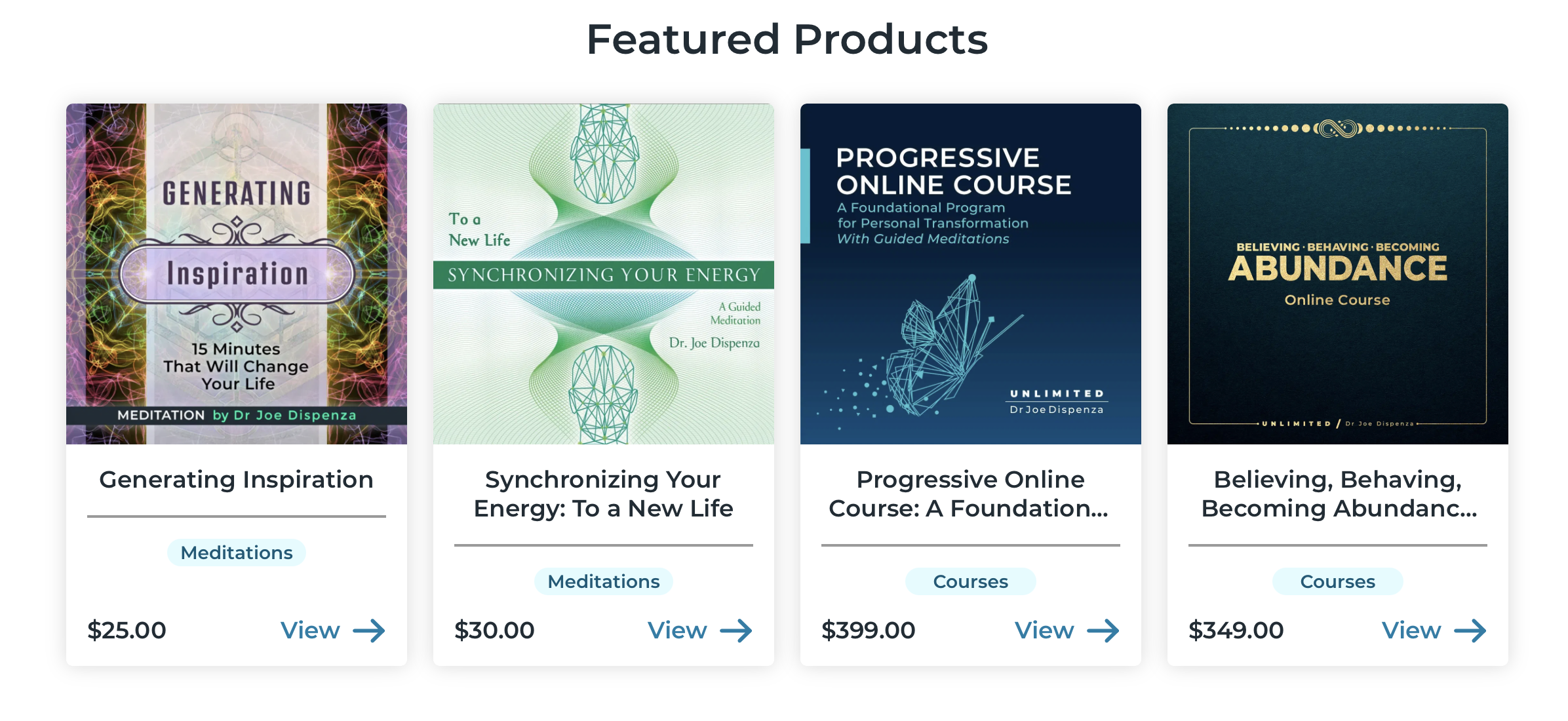
Dispenza loves to sell products like the ones below. You can buy a 15-minute meditation or a whole course, but he makes his real money from $3,000-plus retreats that claim he will teach you how to heal people using your mind, step into other states of being, and create mystical experiences.
I worked briefly for such a company, getting a job without knowing what the product was, and found myself in a world of reselling email lists, selling nonsense products, and promising people they could get rich quick if they just invested a little more money in our program.
Anyway, in online discussions about mindfulness and meditation, it is not uncommon for people to bring up “manifestation” and ask what meditative practices support it.
A lot of these people take mindfulness or Buddhist ideas, strip out the ethics, discipline, and deeper point of the practice, and turn it into a product for getting richer, calmer, or more “aligned.” They use the language of spirituality to make a sales pitch sound wise, but the real move is usually just repackaging desire in prettier words. So instead of helping people see through attachment, they end up selling a more polished version of attachment.
And it’s a multi-billion-dollar business.
So many good people come to the internet looking for help, and rather than finding help, they find a sales pitch. A sales pitch that is missing the most important aspects of these practices. The Law of Attraction capitalizes on people’s desire rather than helping lead them away from it. It tells people they can control the universe and get what they want, rather than teaching them that mindfulness and meditation cannot fix your life, but they can help you sort out the mess so you can decide to take action and fix your own life.
Now, I don’t mean to begrudge people a living, but in the Buddha’s teaching, one step on the Noble Eightfold Path is Right Livelihood. Right Livelihood is the Buddhist idea that work should avoid harming others and should support a life of ethics, compassion, and clarity instead of greed or harm.
What Dispenza, Vitale, and others do is far from Right Livelihood. It is a business built on greed, harm, and a lack of compassion at its core. While many Buddhist practitioners, monks, and mindfulness teachers make money through speaking, books, products, or retreats, we should look at each through the lens of Right Livelihood to ensure they are doing so with ethics, compassion, and clarity instead of greed or harm.
For those entering the world of mindfulness or meditation, I only urge you to be careful. There are charlatans everywhere looking to take advantage of a growing practice, and one that is still little understood in the West, which makes it ripe for exploitation by those driven by greed.
Enjoyed this? I write weekly on secular Buddhism, mindfulness, and everyday practice.
Subscribe on Substack →